Monday, September 9, 2013


 Measuring the Impact of Advanced Transportation Technologies on Traveler Behavior

At what point do we begin to measure and manage the impact of travel information? Does better information about both traffic and transit influence traveler behavior with sizable route and mode shifts to merit monitoring? If so, how can we use the real-time information and incorporate it into network management practices?
Jane Lappin, senior social scientist at Volpe, The National Transportation Systems Center, discussed traveler behavior at a recent Transportation Trajectories event.
Jane Lappin, senior social scientist at Volpe, The National Transportation Systems Center, discussed traveler behavior at a recent Transportation Trajectories event. (Volpe photo)
Travelers are active participants in transportation network operations, said Jane Lappin, a senior social scientist, at Volpe, The National Transportation Systems Center. Since 1997, a Volpe team surveyed over 16,000 travelers—most of them repeatedly. Volpe has analyzed over 30,000 surveys to learn how travelers use information and to better understand the impact of traveler information on their trip choices.
"Along the way, we've learned about and contributed to the market dynamics of Intelligent Transportation Systems (ITS), how people use computers and mobile phones, and the role of information in transportation network performance," said Lappin during a recentTransportation Trajectories discussion. She shared a unique perspective that illustrates Volpe's work in this area and tells a story, over time, about how people travel on the nation's infrastructure.
Volpe has measured and evaluated traveler behavior in a number of metro areas, including Atlanta, Seattle, Los Angeles, Dallas, San Diego, and Cobb County Georgia. Volpe performed this work in support of the U.S. Department of Transportation's Federal Highway Administration (FHWA) and ITS Joint Program Office.
In 1997, many households shared a single cell phone, and used dial-up internet with limited access. Radio was the primary source of traveler information. Today, people own smart phones, computers, and tablets. As the quality of the technology improves, the surveys show there is an uptick in the use of mobile, hand-held internet devices as the preferred method for obtaining advanced traveler-information services.
"We've found that age, education, income, and location predict many of our choices and behaviors," said Lappin. But there have been changes through the years. In 2003, traveler-information users tended to be older, educated, higher-income male commuters. In 2012, the male/female ratio was roughly equal and access by employed individuals across all income levels was more evenly distributed. Quality, convenience, and reliable information related to travel times and route options has also influenced traveler choices.
Survey data and focus group findings show that travelers are less inclined to change travel mode in response to information, but more likely to change their route and departure times.
"Good traffic and transit information is a good public investment," said Lappin. It improves customer satisfaction, optimizes trip choices, and creates value for drivers and transit users by allowing them to manage their time more effectively.

Funding Constraints Fuel New Paradigms in Federal Transportation Policy

Emil Frankel shared his insight on the significant reforms emerging from last year's surface transportation reauthorization at a recent Straight from the Source event.  (Volpe Photo)
Emil Frankel shared his insight on the significant reforms emerging from last year's surface transportation reauthorization at a recent Straight from the Source event.(Volpe photo)
"We are in a new environment…a time of constraint certainly at the fiscal level…that is driving changes in policy perspective," said Emil Frankel, a visiting scholar at the Bipartisan Policy Center (BPC) in Washington, D.C., and a former Assistant Secretary for Transportation Policy of the U.S. Department of Transportation.
Frankel shared his insight on the significant reforms emerging from last year's surface transportation reauthorization, Moving Ahead for Progress in the 21st Century Act (MAP-21), and future trends, at a recent Straight from the Source lecture at Volpe, The National Transportation System Center.
"We are actually in a period of change, despite the stagnation in federal funding," Frankel explained. "It's a period of change in identifying the…extent of the federal role in surface transportation and also the character and nature of it. Changes in national transportation policy are occurring; though they are incremental..."
Frankel pointed to the key elements of the ongoing paradigm shift in federal transportation policy:
  • An increasing role for states and localities in transportation, despite their own budget challenges
  • A gradual shift away from user-based support for investment in transportation infrastructure
  • MAP-21's program consolidation and promotion of performance management principles
  • A steady shift from federal funding to federal financing, programs that provide federal credit assistance such as direct loans or standby lines of credit to finance transportation projects
Frankel observed that the public seems unwilling to invest at a federal level to restore the nation's so-called "crumbling infrastructure," yet noted there is a broad acknowledgment it is aging, deteriorating, and in urban areas severely congested. The American public accepts these conditions "in lieu of supporting higher federal gasoline taxes or new kinds of user fees to invest in these facilities." Frankel said there is more success at the state and metropolitan levels in obtaining revenue increases, because people can connect to what they see or believe will be implemented. This is hard to do at the federal level.
Frankel outlined how to meet these pressing transportation challenges:
  • clearly define the Federal role in surface transportation
  • accept that transportation infrastructure funding is an investment in long-term economic growth
  • make sure investment sources are long term and sustainable
  • resolve investment issues impacting transportation spending on infrastructure
  • make wiser decisions about transportation projects when investing scarce resources.
For more information on Volpe's thought leadership program, please contact, Ellen Bell, director of Strategic Initiatives for Research and Innovation.

Monday, August 26, 2013

Influential people aren't just born; they're made. A new book reveals the two personality traits you must cultivate to be more compelling.
August 22, 2013 Everyone wants to know how to be more influential. But most of us don't really think we can have the kind of charisma we associate with someone like Bill Clinton, Oprah Winfrey or Jon Stewart unless it comes naturally.
But according to KNP Communications founders John Neffinger and Matthew Kohut, having a magnetic personality is something anyone can learn, and they show us how in their new book, Compelling People: The Hidden Qualities That Make Us Influential. The book is dynamic enough that it's already being taught at Harvard, Columbia and Georgetown.
To learn to be more compelling, it helps to know how people make personality judgments about others. It turns out that when we decide how we feel about someone, we make not just one judgment, but two. The two criteria that count are what we call "strength" and "warmth." Strength is a person's capacity to make things happen with ability and force of will. When people project strength, they command our respect. Warmth, on the other hand, is the sense that a person shares our feelings, interests and view of the world. When people project warmth, we like and support them.
Of course, knowing that strength and warmth matter to people is one thing, but acting on that insight turns out to be tricky. Here's the thing: It's very difficult to project both at once, because strength and warmth are in direct tension with each other. The ability to master this balancing act is so rare that we celebrate, elevate and envy those people—like Martin Luther King Jr., Ronald Reagan and John Kennedy—who've managed to do it.
I caught up with co-author Kohut to ask him a few questions on the art of influence.
compelling-people-may-open-forum-embed
Is it better to be loved or feared?
Back in medieval Florence, Machiavelli recommended choosing fear over love, strength over warmth, a competitive strategy over a cooperative one. This makes perfect sense in dog-eat-dog situations where cooperation is not likely to be reciprocated and there are no social forces to sanction excessive strength. In our more civilized society, however, research suggests that when people size each other up, warmth is more important. The challenge is how to get past that choice and be both at once.

What did Sheryl Sandberg, the author of Lean In, get wrong about how women are seen in the workplace?
First of all, Sheryl Sandberg is a good example of balancing strength and warmth—she is hard-charging and gets things done, but in public, she's almost always smiling and happy too. She's also done a tremendous service by reinvigorating the conversation about women in the workplace. She undercuts her own argument in one key spot: In Lean In, she writes, "If a woman is competent, she does not seem nice enough. If a woman seems really nice, she is considered more nice than competent."
The word "competent" comes from the research, but it misses a key part of the story. There are plenty of professional women who seem both very competent and very nice, but not strong, standing up for themselves, assertive or leaning in. There is more to strength than just technical competence: it's not just skill, it's will. She's right that projecting strength does hurt perceptions of a woman's warmth in a professional setting, so to avoid being seen negatively when they lean in, women also have to actively project lots of warmth.

What's the single best way to get someone to agree with you?
If you want someone to agree with you, the best way to make that happen is to agree with them about something first. When you agree with people, you're confirming their view of the world, and that feels good to them. When you express familiar sentiments, you also seem more familiar and less likely to upset them or threaten their worldview, so their anxiety level goes down and they feel more comfortable. People like it when you make them feel good, and then they associate that good feeling with you, so they like you. And that makes them more likely to agree with you.

You talk about the most powerful phrase in politics. Is that all I need to be president?
The most powerful phrase in politics is "common sense." Every candidate for president wants to be the candidate who stands for common sense, because most voters see themselves as common-sense people. On one level, candidates use this phrase to say they're practical and grounded. It also resonates on a deeper level because common sense suggests you have a shared, or common, sense of the way things are in life. So common sense is both pragmatic and a gut-level feeling, which makes it so important in a political context.

What are some techniques for projecting warmth?
The most common thing we all do to project warmth is to smile. We equate all kinds of good things with people who smile. Teachers are more likely to call on smiling students. People who work in restaurants get better tips when they smile at customers. Beyond smiling, if you want to project warmth toward people, you have to feel warmth for people. When you sense the need to make a deeper connection, ask yourself, What are our shared concerns and interests? How can I make it clear that we want the same things or are on the same team?

You write that our looks affect our career prospects. How so?
Beauty has a kind of a blinding effect on our judgment. For instance, research shows we judge writing more favorably if we find the author attractive, and attractive people make more money. At the other end of the spectrum, when someone’s mouth naturally forms a frown, that can cause social problems because people will associate that expression with how the person feels. Bad moods are socially contagious, so people may avoid you or approach with caution. The good news is, this can be overcome by actively smiling a lot to counteract this effect.

What's the one thing you want readers to take away from this book?
Once you recognize the dynamics of strength and warmth, you see people—yourself, your loved ones, your colleagues, random strangers, everybody—in a new way. And if you understand how to project your own strength and warmth, you will change the way people see you.
===============

Saturday, August 3, 2013

SAFARI RAMADHAN


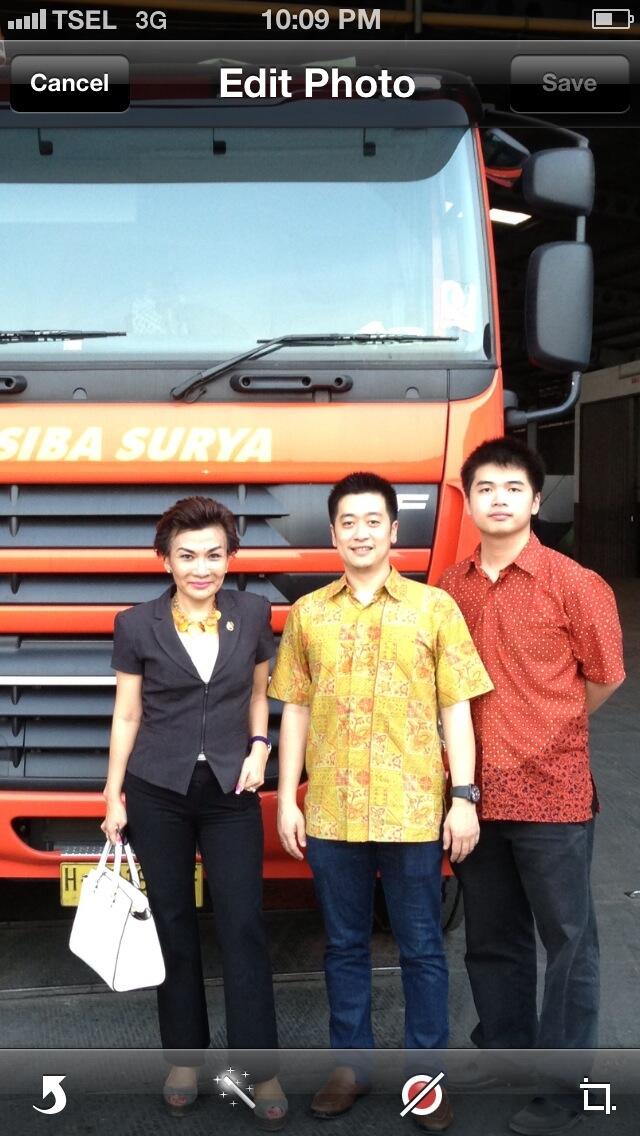
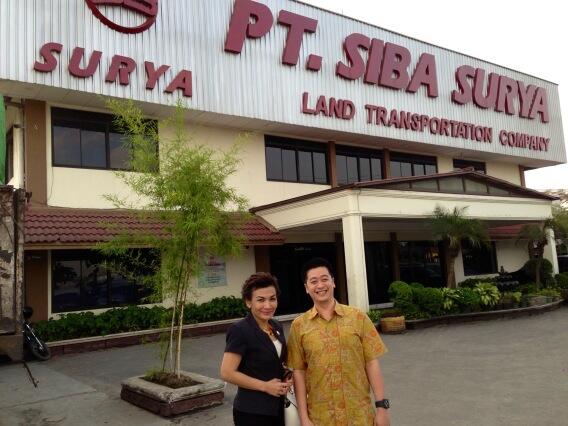
SIBA CEO w/DPP


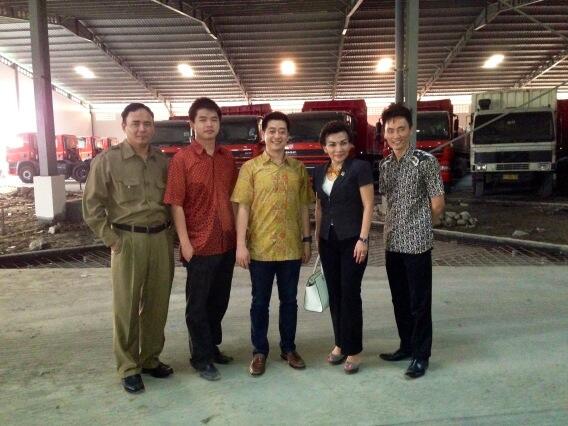
Visiting SIBA Truck Company with 3500 Trucks Semarang with the young CEO Steve
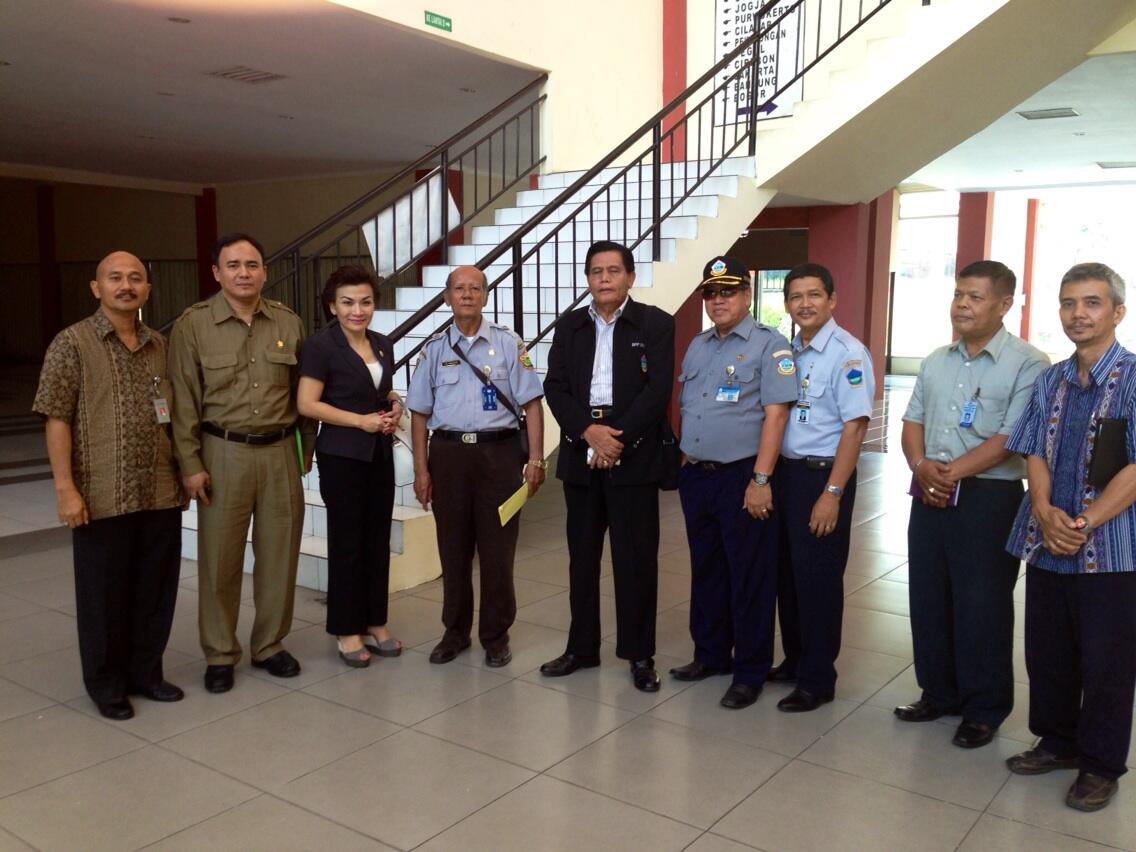
Safari Ramadhan Organda Central Board 2013 to SRG after SUB

Tuesday, July 16, 2013

Ketentuan Tentang Tarif Angkutan Umum:


1.       Peraturan Gubernur Provinsi DKI Jakarta Nomor 67 Peraturan Gubernur Provinsi DKI Jakarta Nomor 67 Tahun 2013 tentang Tarif Angkutan Penumpang Dengan Mobil Bus Umum, Tanggal 10 Juli 2013, Berita Daerah Nomor 71012 tahun 2013 Tanggal 11 Juli 2013,
sbb:                                     
1. Bus Kecil Rp. 3.000,                           
2. Bus Sedang, Penumpang Umum.  Rp.3.000, Pelajar Rp.1.000,                   
3. Bus Besar Reguler/Patas, Penumpang Umum Rp.3.000, Pelajar Rp.1.000,-

2.       Surat Gubernur Kepada DPU Taksi Organda Nomor 880/-1.881.1 tanggal 10 Juli 2013 Hal Persetujuan Tarif Taksi sbb:
a. Flag Fall Rp.7.000
b. Kilometer berikutnya Rp.3.600
c. Biaya Tunggu/jam Rp.42.000

3.    Surat Gubernur Kepada DPU Bus Kota Organda Nomor 881/-1.881.1 tanggal 10 Juli 2013 Hal Persetujuan Tarif Angkutan Bus Kota Non Ekonomi sbb:
a. Sedang AC Rp.6.000
b. Patas AC Rp.7.000
c. APTB (jarak 30 KM) Rp.8.000

Terima Kasih, Wass Pristono DisHub DKI Jakarta

Manusia dengan segala keterbatasannya, tidak akan mampu memenuhi semua harapan-harapan manusia lainnya. Hanya Tuhan, yg merupakan Sumber dari Segala-galanya dan Sang Mencipta yg mampu Memberkati, Melindungi, Memberikan Arahan-NYA kepada kita Manusia agar Kita menjadi yg terbaik, mampu melewati tantangan Hidup yg menjadikan kita, manusia, naik kelas dan keluar sebagai Lebih dari Pemenang. Selamat Memasuki Bulan Suci Ramadhan, Selamat Menunaikan Ibadah Puasa dan Maaf Lahir Bathin. 

Wassalam Eka Sari Lorena, 
Ketua Umum Dewan Pimpinan Pusat ORGANDA Indonesia.

Tuesday, July 9, 2013


BY Lewis Howes | July 8, 2013|


406


839
 Confidence, Excellence and Independence: Business Lessons From 4 Great Leaders


Jay Z
Image credit: Medieval Beatz
Great leaders often have great lessons to share. Their stories remind us -- in business especially -- that failure is not avoidable and that success in any endeavor is a choice.
While we cannot control all our circumstances, what we can control is our response. And that's what makes a leader great: his or her decision to take responsibility in the midst of chaos.
The following quotes are from four of the most influential people from the past and present. Below each quote is my feedback on how I've learned from these quotes in my own business, and how they can help you with yours.
1. Be confident in who you are.
"If money is your hope for independence you will never have it. The only real security that a man will have in this world is a reserve of knowledge, experience and ability."
-- Henry Ford, founder of the Ford Motor Company
Subscribe to RSS
It can be easy to look at a successful entrepreneur and think to yourself, "I bet things come easy to them" or "They were just lucky." But after spending time with successful men and women I've learned that many of them were once broke, bankrupt and on the edge at one point in their life -- myself included.
What separates these people is their decision to not allow their financial situations to dictate their emotions, define their worth or give them a sense of superiority over others. These people know that money can be easily lost and easily made. The only thing that really matters is learning how to create and offer value.
Once you learn how to create value in your market, you can shift your feelings of security from what you have to who you are.
2. Think independently.
"If you want to succeed you should strike out on new paths, rather than travel worn paths of accepted success."
-- John D. Rockefeller, founder of Standard Oil Company
Read that quote again. It's the secret behind the biggest breakthroughs in innovation.
Innovation is not achieved by imitating the success of others. It's achieved by great leaders who choose to risk failure and ridicule in order to create something completely new.
The biggest turning point in my life happened when I declined the security of a 9 to 5 job and decided to build a digital business on the simple principal of adding value to the lives of others. I was scared, broke and alone, but the opportunity I saw drove me to push through all that.
Creating value is the driving force behind everything I do.
3. Know when to move on.
"Part of being a winner is knowing when enough is enough. Sometimes you have to give up the fight and walk away, and move on to something that's more productive."
-- Donald Trump, entrepreneur, television personality and author.
As entrepreneurs we've learned to fight for what we want, and hate losing. But not every fight is worth your time. The trick is to always remember the big picture and to not allow your ego to get in the way of being productive.
I've learned that there's a big difference between perseverance and stubbornness. Stubbornness involves me forcing things to work, while perseverance requires me to work consistently with what's already working. Some of the best decisions I've made involved saying no to a potential partnership or pulling the plug on a product that wasn't working.
4. Pursue excellence, not fame.
"Having success for a year or two, that's called being hot. Being in demand. Excellence is being able to perform at a high level for a long period of time."
-- Jay Z, music artist and entrepreneur
I know a number of people who have experienced overnight success with a product or startup, but allowed their success to fool them into thinking they were special. They neglected the critical business feedback they received from their partners and clients.
Once an entrepreneur stops growing, learning and being open to feedback, it can spell the end of his or her business. 
Unfortunately, some entrepreneurs need to "lose it all" before they learn this lesson. My recent podcast with entrepreneur, hedge fund manager and author James Altucher illustrates this point.
So make it a point to pursue excellence, not fame. Excellence is who you are. Fame is who you once were.

Monday, July 8, 2013

Susunan Pengurus DPD Organda DKI Jakarta


Ketua DPD (Dewan Pimpinan Daerah) Organda Provinsi DKI Jakarta terpilih hari ini adalah Bapak Haji Safruan Sinungan 0818101956 (menggantikan Bapak Sudirman) sebagai Ketua DPD ORGANDA Provinsi DKI Jakarta dengan periode masa kepemimpinan 09 Juli 2013-08 Juli 2018 (menggantikan bapak Sudirman)
Gemilang Tarigan bukan lagi Ketua DPU/ Dewan Pimpinan Unit Angsuspel Provinsi DKI Jakarta juga tmt hari ini/digantikan oleh Bapak Andre Silalahi 08128400444 sebagai Ketua Unit Angsuspel DPD ORGANDA. 
Sebagai Wakil ketua 1 DPD Organda DKI Jakarta            : Ibu Tasmiati, 
Wakil Ketua 2                                                                          : Bapak Solon Tarigan 
Wakil Ketua 3.                                                                         : Bapak Ambiya
Sekretaris                                                                                 : Bapak Sitorus  (hp) 08133378934.
Salam ORGANDA DPD Provinsi DKI Jakarta