Monday, October 21, 2013

 Touching people hearts will take you far on your journey to success. Engage with friends whom like to grow together. Zooetemer & Delft are the places yesterday.
Life is very good


KETUM DPP ORGANDA di NEA Panteia Belanda bersama tim Sislognas, NEA Asia Jaya & STC


KETUM DPP ORGANDA Eka Sari Lorena has visited New Green Port Rotterdam, NEA & Delft


Wednesday, October 16, 2013

“…EKA Sari LORENA Harapkan PEOPLE POWER Untuk MELAWAN Kemacetan…”

 
"...Eka Sari Lorena (kanan) bersama Jusman (kiri) dalam Launching Buku Ayo Lawan Kemacetan..." Photo By : Red NRMnews.com
“…Eka Sari Lorena (kanan) bersama Jusman (kiri) dalam Launching Buku Ayo Lawan Kemacetan…” Photo By : Red NRMnews.com
“…NRMnews.com - JAKARTA, Transportasi ibarat aliran darah dalam tubuh, bila aliran tersebut tidak lancar maka akan mengakibatkan stroke, penyakit jantung, dan sebagainya.
Demikianlah Eka Sari Lorena menggambarkan peran penting transportasi. Ketua umum Dewan Pengurus Pusat Organda (organisasi pengusaha nasional angkutan bermotor) ini pun kemudian mengajak masyarakat untuk berperang melawan kemacetan.
Tentunya yang dimaksud bukanlah perang mengangkat senjata, atau dengan berdemo menuntut pemerintah mengatasi kemacetan, Eka Sari justru menuangkan pemikiran, strategi, dan terobosan untuk “melawan dan menghabisi” kemacetan melalui sebuah buku.
“…Buku ini bertujuan mengedukasi publik mengenai kemacetan dan terobosan yang dapat dilakukan untuk mengurainya. Saya percaya people power bisa membuat banyak hal positif…”, ujar Eka dalam launching buku ‘Ayo Lawan Kemacetan’ di Jakarta, Minggu (29/9/2013).
Eka mengurai berbagai kasus mulai dari kemacetan Jakarta, pariwisata Bali, revitalisasi angkutan umum, peran organda, aksi mogok angkutan, hingga mengenai mobil murah dengan cara yang ringan namun cerdas. Mantan menteri perhubungan, Jusman Syafi’I Djamal turut hadir dalam launching buku ini dan menyampaikan apresiasinya, iapun mendorong peran organda yang sangat strategis sebagai satu-satunya mitra pemerintah dalam mengimplementasikan kebijakan pemerintah terkait angkutan bermotor.
Indonesia diramalkan menjadi salah satu dari 7 negara dengan ekonomi terbesar pada tahun 2025. Hal tersebut tentu tidak akan terjadi kalau transportasi tidak dibenahi. Kita dapat semakin produktif karena tidak terjebak dalam kemacetan berjam-jam, sukses dalam melawan kemacetan bergantung pada langkah nyata kita sendiri,” pungkas Eka Sari.

( Oleh : Red. NRMnews.com / Dwi Pravita – Editor : A.Dody.R )

LORENA AJAK LAWAN MACET

LORENA AJAK LAWAN KEMACETAN 
 
LORENA AJAK LAWAN KEMACETAN

Ketua Umum Dewan Pengurus Pusat Organisasi Pengusaha Nasional Indonesia Angkutan Bermotor di Jalan (DPP Organda) Eka Sari Lorena (kanan) memberikan paparan saat acara peluncuran bukunya yang berjudul Ayo Lawan Kemacetan didampingi Mantan Menteri Perhubungan Jusman Syafi’i Djamal di Jakarta, Minggu (29/9/2013). Eka memprediksi jika low cost green car (LCGC) tetap boleh memakai premium, diperkirakan subsidi bahan bakar minyak (BBM) tahun 2014 akan mencapai Rp200 triliun, dana tersebut menurut dia mestinya dapat digunakan untuk membangun 12 jalur mass rapit transit (MRT) setiap tahun.

Organda Tantang Generasi Muda Ciptakan Angkutan Masal


Ketua Umum DPP Organda, Eka Sari Lorena, dan Mantan Menteri Perhubungan, Jusman Syafi'I Jamal, dalam acara peluncuran buku "Ayo Lawan Kemacetan" di Gramedia Pondok Indah Mall, Minggu (29/9/2013). Buku tersebut juga mengkritisi mengenai konsep mobil murah yang beredar di Indonesia saat ini. | KOMPAS.COM/RATIH WINANTI RAHAYU

JAKARTA, KOMPAS.com - Ketua Umum DPP Organda, Eka Sari Lorena, menantang generasi muda untuk menciptakan kendaraan-kendaraan yang bisa digunakan untuk mengangkut banyak penumpang.

"Para generasi muda sekarang berlomba-lomba lah untuk menciptakan mobil-mobil yang bukan hanya untuk pribadi, tetapi juga untuk angkutan massal. Kita lawan masalah kemacetan bersama," kata Ketua Umum DPP Organda, Eka Sari Lorena, saat peluncuran buku "Ayo Lawan Kemacetan" di toko buku Gramedia, Mal Pondok Indah, Minggu (29/9/2013).

Namun menurut Eka, inovasi-inovasi tersebut tidak akan berhasil tanpa dukungan dari pemerintah dan masyarakat luas. Eka melihat hal-hal kreatif dan inovatif kurang mendapat dukungan di Indonesia dibandingkan dengan negara lainnya.

"Saya yakin bangsa Indonesia adalah bangsa yang kreatif. Tetapi persoalannya sering kurang mendapat dukungan dalam menciptakan hal-hal kreatif tersebut," ujarnya.

Jakarta dikenal salah satunya karena kemacetannya. Melalui buku "Ayo Lawan Kemacetan", Eka Sari Lorena ingin mengajak masyarakat untuk mendukung pemerintah dalam mengurangi kemacetan di Jakarta.

Selain itu, Eka juga mengkritisi pemerintah agar melakukan peremajaan angkutan umum dan infrastruktur pendukungnya, seperti terminal, stasiun, bandara, dan pelabuhan. Mengenai konsep mobil murah ramah lingkungan yang baru saja diluncurkan di Indonesia, Eka menganggap konsep tersebut masih belum sesuai jika diterapkan di Indonesia, khususnya di Jakarta.

Monday, September 9, 2013


 Measuring the Impact of Advanced Transportation Technologies on Traveler Behavior

At what point do we begin to measure and manage the impact of travel information? Does better information about both traffic and transit influence traveler behavior with sizable route and mode shifts to merit monitoring? If so, how can we use the real-time information and incorporate it into network management practices?
Jane Lappin, senior social scientist at Volpe, The National Transportation Systems Center, discussed traveler behavior at a recent Transportation Trajectories event.
Jane Lappin, senior social scientist at Volpe, The National Transportation Systems Center, discussed traveler behavior at a recent Transportation Trajectories event. (Volpe photo)
Travelers are active participants in transportation network operations, said Jane Lappin, a senior social scientist, at Volpe, The National Transportation Systems Center. Since 1997, a Volpe team surveyed over 16,000 travelers—most of them repeatedly. Volpe has analyzed over 30,000 surveys to learn how travelers use information and to better understand the impact of traveler information on their trip choices.
"Along the way, we've learned about and contributed to the market dynamics of Intelligent Transportation Systems (ITS), how people use computers and mobile phones, and the role of information in transportation network performance," said Lappin during a recentTransportation Trajectories discussion. She shared a unique perspective that illustrates Volpe's work in this area and tells a story, over time, about how people travel on the nation's infrastructure.
Volpe has measured and evaluated traveler behavior in a number of metro areas, including Atlanta, Seattle, Los Angeles, Dallas, San Diego, and Cobb County Georgia. Volpe performed this work in support of the U.S. Department of Transportation's Federal Highway Administration (FHWA) and ITS Joint Program Office.
In 1997, many households shared a single cell phone, and used dial-up internet with limited access. Radio was the primary source of traveler information. Today, people own smart phones, computers, and tablets. As the quality of the technology improves, the surveys show there is an uptick in the use of mobile, hand-held internet devices as the preferred method for obtaining advanced traveler-information services.
"We've found that age, education, income, and location predict many of our choices and behaviors," said Lappin. But there have been changes through the years. In 2003, traveler-information users tended to be older, educated, higher-income male commuters. In 2012, the male/female ratio was roughly equal and access by employed individuals across all income levels was more evenly distributed. Quality, convenience, and reliable information related to travel times and route options has also influenced traveler choices.
Survey data and focus group findings show that travelers are less inclined to change travel mode in response to information, but more likely to change their route and departure times.
"Good traffic and transit information is a good public investment," said Lappin. It improves customer satisfaction, optimizes trip choices, and creates value for drivers and transit users by allowing them to manage their time more effectively.

Funding Constraints Fuel New Paradigms in Federal Transportation Policy

Emil Frankel shared his insight on the significant reforms emerging from last year's surface transportation reauthorization at a recent Straight from the Source event.  (Volpe Photo)
Emil Frankel shared his insight on the significant reforms emerging from last year's surface transportation reauthorization at a recent Straight from the Source event.(Volpe photo)
"We are in a new environment…a time of constraint certainly at the fiscal level…that is driving changes in policy perspective," said Emil Frankel, a visiting scholar at the Bipartisan Policy Center (BPC) in Washington, D.C., and a former Assistant Secretary for Transportation Policy of the U.S. Department of Transportation.
Frankel shared his insight on the significant reforms emerging from last year's surface transportation reauthorization, Moving Ahead for Progress in the 21st Century Act (MAP-21), and future trends, at a recent Straight from the Source lecture at Volpe, The National Transportation System Center.
"We are actually in a period of change, despite the stagnation in federal funding," Frankel explained. "It's a period of change in identifying the…extent of the federal role in surface transportation and also the character and nature of it. Changes in national transportation policy are occurring; though they are incremental..."
Frankel pointed to the key elements of the ongoing paradigm shift in federal transportation policy:
  • An increasing role for states and localities in transportation, despite their own budget challenges
  • A gradual shift away from user-based support for investment in transportation infrastructure
  • MAP-21's program consolidation and promotion of performance management principles
  • A steady shift from federal funding to federal financing, programs that provide federal credit assistance such as direct loans or standby lines of credit to finance transportation projects
Frankel observed that the public seems unwilling to invest at a federal level to restore the nation's so-called "crumbling infrastructure," yet noted there is a broad acknowledgment it is aging, deteriorating, and in urban areas severely congested. The American public accepts these conditions "in lieu of supporting higher federal gasoline taxes or new kinds of user fees to invest in these facilities." Frankel said there is more success at the state and metropolitan levels in obtaining revenue increases, because people can connect to what they see or believe will be implemented. This is hard to do at the federal level.
Frankel outlined how to meet these pressing transportation challenges:
  • clearly define the Federal role in surface transportation
  • accept that transportation infrastructure funding is an investment in long-term economic growth
  • make sure investment sources are long term and sustainable
  • resolve investment issues impacting transportation spending on infrastructure
  • make wiser decisions about transportation projects when investing scarce resources.
For more information on Volpe's thought leadership program, please contact, Ellen Bell, director of Strategic Initiatives for Research and Innovation.

Monday, August 26, 2013

Influential people aren't just born; they're made. A new book reveals the two personality traits you must cultivate to be more compelling.
August 22, 2013 Everyone wants to know how to be more influential. But most of us don't really think we can have the kind of charisma we associate with someone like Bill Clinton, Oprah Winfrey or Jon Stewart unless it comes naturally.
But according to KNP Communications founders John Neffinger and Matthew Kohut, having a magnetic personality is something anyone can learn, and they show us how in their new book, Compelling People: The Hidden Qualities That Make Us Influential. The book is dynamic enough that it's already being taught at Harvard, Columbia and Georgetown.
To learn to be more compelling, it helps to know how people make personality judgments about others. It turns out that when we decide how we feel about someone, we make not just one judgment, but two. The two criteria that count are what we call "strength" and "warmth." Strength is a person's capacity to make things happen with ability and force of will. When people project strength, they command our respect. Warmth, on the other hand, is the sense that a person shares our feelings, interests and view of the world. When people project warmth, we like and support them.
Of course, knowing that strength and warmth matter to people is one thing, but acting on that insight turns out to be tricky. Here's the thing: It's very difficult to project both at once, because strength and warmth are in direct tension with each other. The ability to master this balancing act is so rare that we celebrate, elevate and envy those people—like Martin Luther King Jr., Ronald Reagan and John Kennedy—who've managed to do it.
I caught up with co-author Kohut to ask him a few questions on the art of influence.
compelling-people-may-open-forum-embed
Is it better to be loved or feared?
Back in medieval Florence, Machiavelli recommended choosing fear over love, strength over warmth, a competitive strategy over a cooperative one. This makes perfect sense in dog-eat-dog situations where cooperation is not likely to be reciprocated and there are no social forces to sanction excessive strength. In our more civilized society, however, research suggests that when people size each other up, warmth is more important. The challenge is how to get past that choice and be both at once.

What did Sheryl Sandberg, the author of Lean In, get wrong about how women are seen in the workplace?
First of all, Sheryl Sandberg is a good example of balancing strength and warmth—she is hard-charging and gets things done, but in public, she's almost always smiling and happy too. She's also done a tremendous service by reinvigorating the conversation about women in the workplace. She undercuts her own argument in one key spot: In Lean In, she writes, "If a woman is competent, she does not seem nice enough. If a woman seems really nice, she is considered more nice than competent."
The word "competent" comes from the research, but it misses a key part of the story. There are plenty of professional women who seem both very competent and very nice, but not strong, standing up for themselves, assertive or leaning in. There is more to strength than just technical competence: it's not just skill, it's will. She's right that projecting strength does hurt perceptions of a woman's warmth in a professional setting, so to avoid being seen negatively when they lean in, women also have to actively project lots of warmth.

What's the single best way to get someone to agree with you?
If you want someone to agree with you, the best way to make that happen is to agree with them about something first. When you agree with people, you're confirming their view of the world, and that feels good to them. When you express familiar sentiments, you also seem more familiar and less likely to upset them or threaten their worldview, so their anxiety level goes down and they feel more comfortable. People like it when you make them feel good, and then they associate that good feeling with you, so they like you. And that makes them more likely to agree with you.

You talk about the most powerful phrase in politics. Is that all I need to be president?
The most powerful phrase in politics is "common sense." Every candidate for president wants to be the candidate who stands for common sense, because most voters see themselves as common-sense people. On one level, candidates use this phrase to say they're practical and grounded. It also resonates on a deeper level because common sense suggests you have a shared, or common, sense of the way things are in life. So common sense is both pragmatic and a gut-level feeling, which makes it so important in a political context.

What are some techniques for projecting warmth?
The most common thing we all do to project warmth is to smile. We equate all kinds of good things with people who smile. Teachers are more likely to call on smiling students. People who work in restaurants get better tips when they smile at customers. Beyond smiling, if you want to project warmth toward people, you have to feel warmth for people. When you sense the need to make a deeper connection, ask yourself, What are our shared concerns and interests? How can I make it clear that we want the same things or are on the same team?

You write that our looks affect our career prospects. How so?
Beauty has a kind of a blinding effect on our judgment. For instance, research shows we judge writing more favorably if we find the author attractive, and attractive people make more money. At the other end of the spectrum, when someone’s mouth naturally forms a frown, that can cause social problems because people will associate that expression with how the person feels. Bad moods are socially contagious, so people may avoid you or approach with caution. The good news is, this can be overcome by actively smiling a lot to counteract this effect.

What's the one thing you want readers to take away from this book?
Once you recognize the dynamics of strength and warmth, you see people—yourself, your loved ones, your colleagues, random strangers, everybody—in a new way. And if you understand how to project your own strength and warmth, you will change the way people see you.
===============

Saturday, August 3, 2013

SAFARI RAMADHAN


SIBA CEO w/DPP


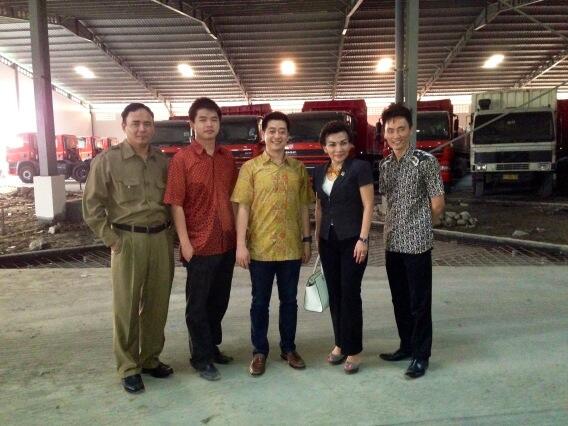
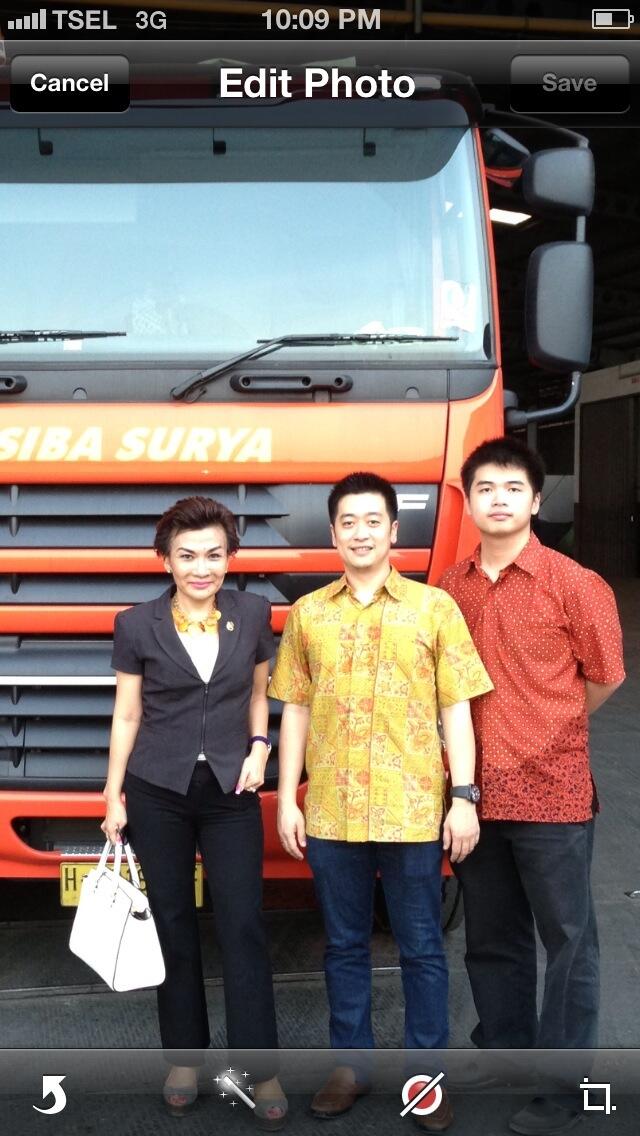
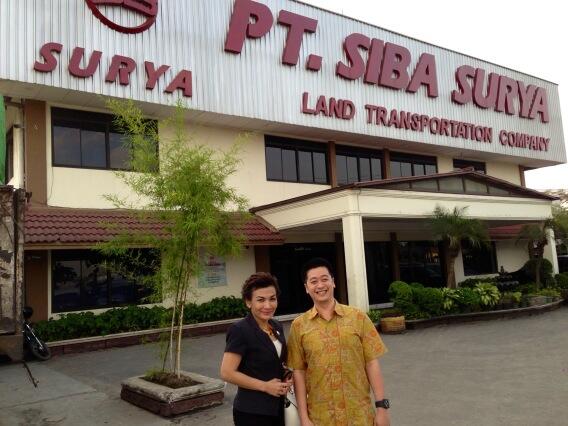
Visiting SIBA Truck Company with 3500 Trucks Semarang with the young CEO Steve
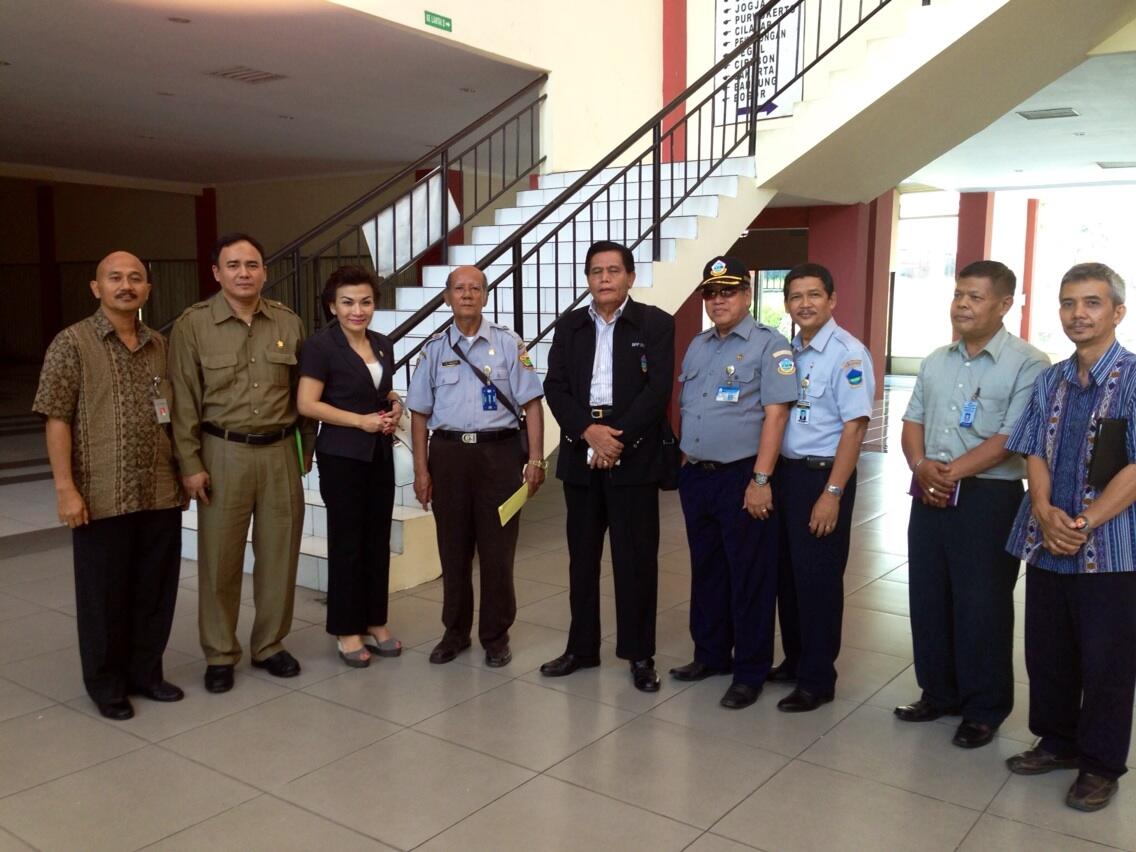
Safari Ramadhan Organda Central Board 2013 to SRG after SUB